
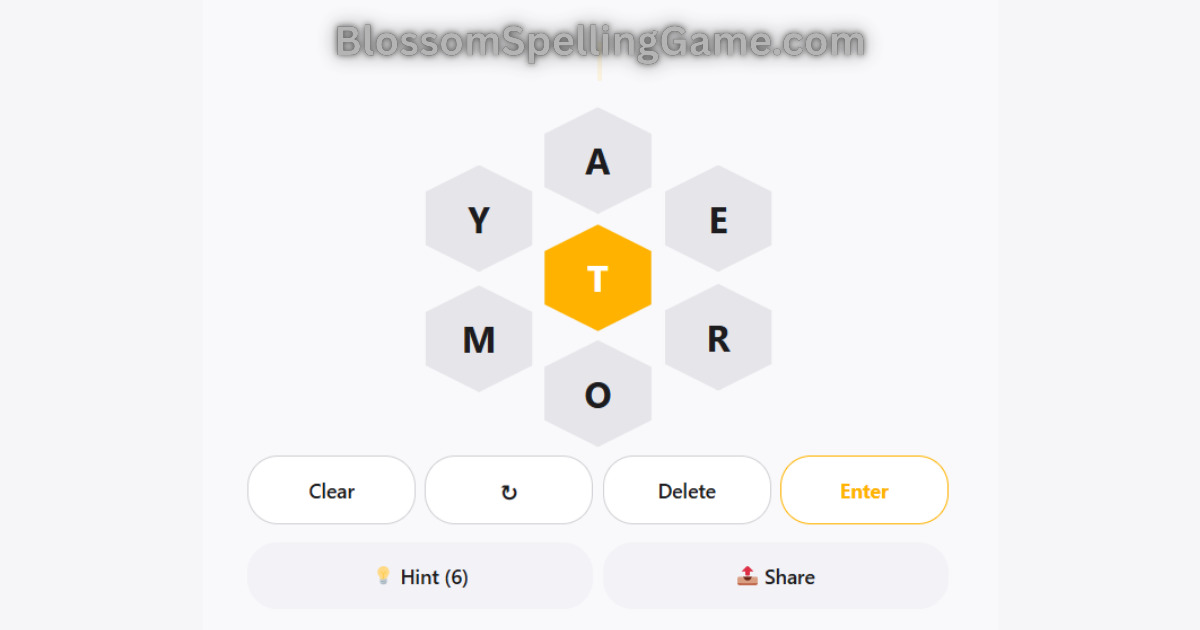
Let’s be honest — the first time you sit down with the Blossom word game, you’re hooked. Seven letters arranged like flower petals, a center letter you have to use, and a quiet little pressure building in your chest as the clock of your attention ticks.
Then it hits you: How many words am I actually trying to find here?
It’s one of the most searched questions about this game, and surprisingly, a lot of sites give you a half-answer or an outright wrong one. So let’s fix that. Whether you just discovered Blossom on Merriam-Webster’s website or you’ve been playing at BlossomSpellingGame.com for weeks, this guide breaks down exactly how the word count works — and how to actually get better at finding them.
The Blossom word game asks you to find 12 words per puzzle. That number is the target — but there’s a lot more happening underneath it that determines whether those 12 words earn you 25 points or 120.
How Many Words Do You Need to Find?
Here’s the core answer everyone’s looking for:
The standard goal in the Blossom word game is to find 12 words to complete the puzzle.
That’s the target. Find 12 valid words using your seven flower letters (with the center letter in every single one), and you’ve solved the day’s puzzle.
Now, 12 might sound easy. Try it. You’ll quickly discover that some letter combinations practically beg you to find words, while others feel like a vocabulary obstacle course designed specifically to humble you.
One thing I find fascinating about this specific number — 12 isn’t arbitrary. It’s calibrated so that the puzzle feels completable but not automatic. A casual player might get 8-10. A word nerd who knows their prefixes? They’ll hit 12 and keep going.
Is There a Maximum Word Limit?
This is where it gets interesting, and where a lot of guides get it wrong.
The goal is 12 words. But there is no hard cap on how many words you can find. If those seven letters happen to allow 30 valid English words, you can find all 30. The game will accept every valid one.
What this means practically: once you hit 12, don’t stop. Every extra word you find still scores points and pushes your rank higher. The 12-word mark is the finish line for puzzle completion — not the ceiling for your performance.
Think of it like a road trip where the GPS says you’ve “arrived” at the destination, but there are three more scenic overlooks right ahead. You can keep driving.
How the Scoring Works (Word Length Matters A Lot)
Not all words are created equal in Blossom. The scoring system is designed to reward you for going long.
Blossom scores words by length — 4-letter words earn 1 point, 5-letter words earn 5, and every letter beyond that adds 1 point. Finding the pangram (the word using all 7 letters) adds a +7 bonus on top. One highlighted petal letter also adds +5 every time it appears in a word. For the complete breakdown with examples, see our Blossom scoring guide .
Here’s the breakdown:
See what’s happening there? A 7-letter word isn’t just marginally better than a 4-letter word — it’s six times more valuable. That jump between 6 and 7 letters is where the real scoring leverage lives.
A lot of beginners spend their time hunting for short words because they feel easier to find. Totally understandable. But if you can train your brain to look for longer combinations first, your score will climb fast.
One practical tip: before submitting a 4-letter word, ask yourself — can I add one more letter to this? That single habit shift can double your score over time.
What’s a Pangram and Why It Changes Everything
Every puzzle in Blossom includes at least one pangram — a word that uses all seven of the available letters at least once.
Finding the pangram is the holy grail of each daily puzzle. It earns you a massive +7 bonus on top of the word’s regular score.
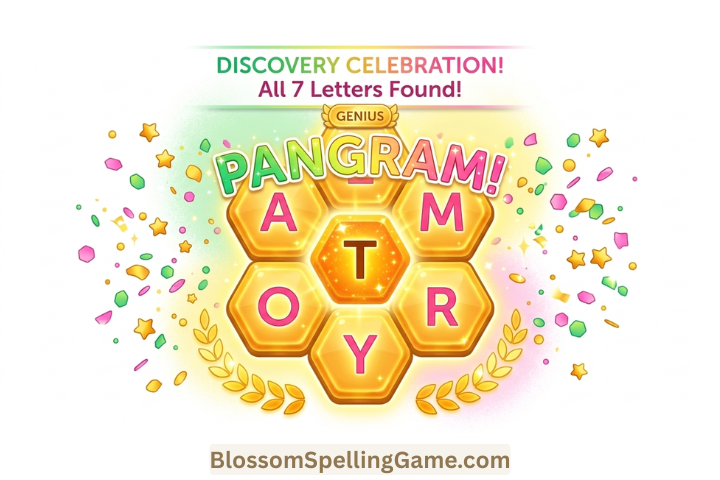
So a 7-letter pangram would score: 12 (word points) + 7 (pangram bonus) = 19 points from a single word.
Not every puzzle guarantees a pangram every day — some versions of the game may occasionally skip it — but when one exists, finding it is the single biggest score multiplier available to you.
Here’s the interesting part most people miss: the pangram isn’t always a common word. It’s often something obscure, technical, or archaic that uses the exact right combination of letters. This is where having a broad vocabulary (or a love of odd words) really pays off.
Every puzzle includes at least one pangram — a word using all seven letters — worth a +7 bonus on top of its base score. It’s separate from the 12-word completion goal but absolutely worth hunting. Our Pangram Guide has a full system for finding it every time.
The Bonus Letter: Hidden Edge Most Players Miss
Here’s something a surprising number of players overlook entirely.
In many versions of the Blossom game (including some on third-party platforms), one of the six petal letters is highlighted differently — often with a yellow or golden outline. This is the bonus letter.
Every time you use that bonus letter in a word, you earn an extra +5 points.
That changes your strategy. Suddenly, it’s not just about long words — it’s about long words that include the bonus letter. A 6-letter word with the bonus letter can outperform a 7-letter word without it.
Keep an eye on which letter is highlighted. If you’re unsure, check the game interface carefully at BlossomSpellingGame.com — the bonus letter is visually distinct from the rest.
Rank System: From Beginner to Bloom Master
The Blossom word game doesn’t just track your word count — it tracks your score, and that score maps to a rank. Knowing the rank thresholds helps you understand what you’re actually aiming for each day.
Here’s a general guide based on typical daily puzzle scoring:
| Score Range | Rank Level |
| 0 – 50 | Beginner |
| 51 – 100 | Learner |
| 101 – 150 | Wordsmith |
| 151 – 250 | Expert |
| 251+ | Bloom Master |
These ranges can shift based on the day’s puzzle difficulty, so don’t get discouraged if one day feels harder than the last. The letter combinations are different every single day, which means some puzzles are objectively tougher than others.
A personal observation: the days when I struggle most to find 12 words often have vowel-heavy or consonant-heavy letter sets. When you see something like four vowels in the flower, expect a challenging session.
How to Find More Words Every Single Day
This is the section that actually moves the needle. Finding 12 words is the goal — but how do you get there consistently, especially on rough days?
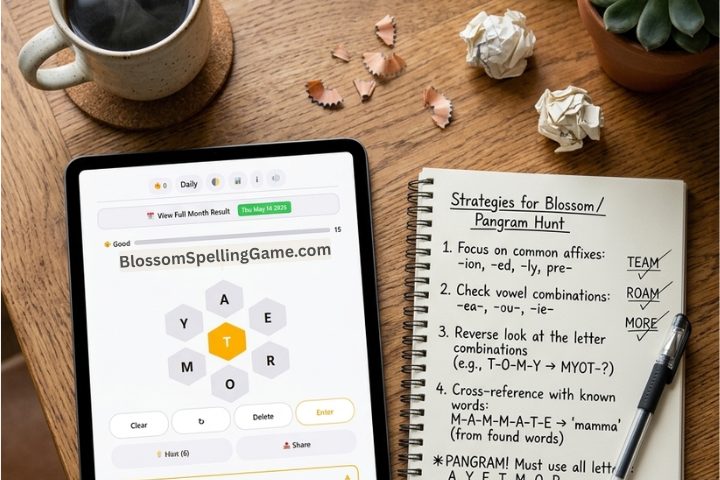
1. Start With the Center Letter
Start every word search from the center letter — it’s required in every submission, so it’s your most logical anchor point. See our Center Letter Guide for a full approach to building from it.
2. Think in Suffixes and Prefixes
The English language is beautifully modular. If you’ve found the word “CARE,” ask: can I make CARES? CARED? CAREFUL? Each variation is a separate valid word. Suffix hunting alone — -ed, -ing, -er, -est, -ness, -less, -ful — can add 3-4 words to your list on almost any puzzle.
4. Look for Words Inside Words
Sometimes you’ll find a long word only after noticing a short word embedded inside it. “PLANT” hiding inside “IMPLANT.” “RING” becoming “SPRING” with the right additional letters. This nested-word thinking unlocks longer combinations.
5. Don’t Ignore Uncommon but Valid Words
Dictionary-valid words don’t have to be everyday vocabulary. If you think of something obscure — a botanical term, an old English word, a technical term — try it. The game accepts any word in its dictionary. Some of those quirky words happen to use unusual letter combinations that appear often in Blossom puzzles.
Common Mistakes That Beginners Make
After watching countless people play (and making these errors myself), here are the patterns that hold players back:
Mistake #: Giving up after hitting 8-9 words. The gap between 9 and 12 words feels brutal sometimes. But those last few words are almost always findable with shuffles and prefix/suffix thinking.
Mistake #: Not using the hint system. If the game offers hints, use them strategically — especially to unlock the first letter of the pangram. There’s no shame in a hint. The goal is to enjoy the game, not suffer through it.
The biggest structural difference between Blossom and NYT Spelling Bee is the word cap — Blossom limits you to 12 submissions while Spelling Bee is open-ended. That one rule changes the entire strategic approach.
FAQ
Q: How many words do you need to complete the Blossom word game?
You need to find 12 valid words to complete a standard Blossom puzzle. Every word must be at least four letters long and must include the center letter.
Q: Is there a limit to how many words you can find in Blossom?
There’s no hard limit. While 12 words completes the puzzle, you can continue finding words beyond that. Any valid word the letters can form will be accepted and scored.
Q: What counts as a valid word in Blossom?
Any real English dictionary word that is at least four letters long, uses only the available letters, and includes the center letter. No proper nouns, no hyphenated words.
Q: Can I reuse letters in the Blossom word game?
Yes. You can reuse any letter — including the center letter — as many times as you need within a single word.
Q: What is a pangram in Blossom and how many points does it give?
A pangram uses all seven available letters at least once. Finding one earns a +7 bonus on top of the word’s regular point value.
Q: How is the Blossom word game scored?
Blossom scores words by length — 4-letter words earn 1 point, 5-letter words earn 5, and every letter beyond that adds 1 point. Finding the pangram adds a +7 bonus on top. One highlighted petal letter also adds +5 every time it appears in a word. For the complete breakdown, see our Blossom scoring guide.
Q: How many words does the average player find in Blossom?
Most casual players find between 8–10 words per puzzle. Finding all 12 puts you in solid company. Going beyond 12 marks you as a strong word game player.
Q: Is the Blossom word game the same every day for everyone?
Yes — the daily puzzle is the same for all players on a given day, which makes it a social game. You can compare results with friends playing the same puzzle.
Q: Do all Blossom puzzles have a pangram?
Most puzzles include at least one pangram. Occasionally, a puzzle may not have one — but this is rare. The game usually signals whether a pangram exists for that day’s letters.
Q: Where can I play Blossom word game for free?
You can play for free at BlossomSpellingGame.com, which offers a fresh daily puzzle, no account required, and no downloads needed.
Conclusion
So — how many words in the Blossom word game? The goal is 12. But here’s the thing: that number is just the starting point.
The real satisfaction of this game isn’t checking a box at 12 words. It’s the hunt. It’s that moment when you stare at seven letters, shuffle them twice, and suddenly see a 7-letter word you never would have noticed. It’s finding the pangram on a day when you thought you’d given up. It’s getting your score into a new rank tier and realizing your vocabulary has quietly grown without you even noticing.
Whether you’re a total beginner who just wants to understand the rules, or a daily player looking for that extra edge, keep two things in mind: prioritize long words for points, and never stop at 11.
Ready to put this into practice? Jump into today’s puzzle at BlossomSpellingGame.com and see how many you can find. Your personal best might surprise you.